

Case study 01 · Building condition assessment
| At a glance | |
|---|---|
| Building | Two-story residential building with an open corridor, Miami Beach |
| Service | Structural building condition assessment |
| Site visit | July 2026 |
| Deliverable | Structural supplemental report with 31 photographs, each keyed to a deficiency type and location |
| Findings | 4 deficiency types, sorted into 3 priority categories |
The situation.
The owners engaged Fortis to assess the building's structure. Fortis visited the property and recorded observations throughout: the ground-floor and second-floor columns, the open corridor slab, the stairs, the gutters and the full exterior envelope. The question was the one every owner faces — what is this building actually doing, and what does it need.
What Fortis found.
- Spalled concrete at three locations. A ground-floor column, the corridor slab and a second-floor column and wall section. Spalling — concrete breaking away from the member — reduces the member's capacity and gives water a path to the reinforcing steel.
-
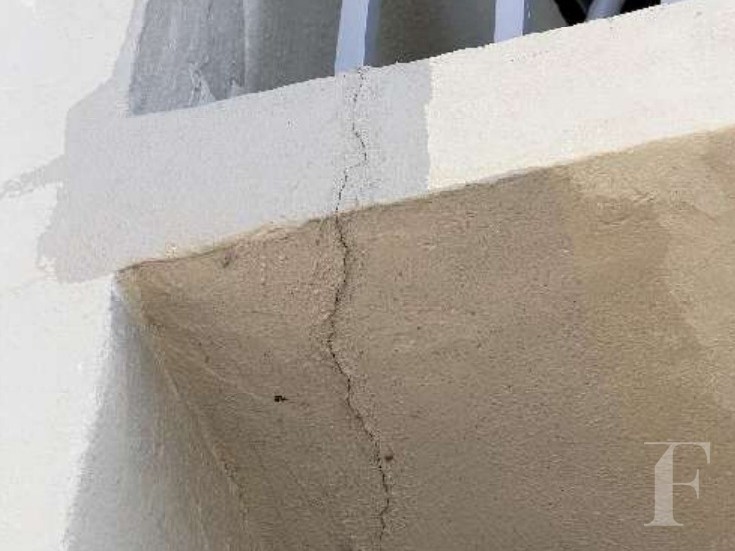
Hollow and cracked stucco across the building envelope. Hollow areas mean the stucco has separated from the wall behind it. Stucco is the building's first defense against water, so it was not treated as cosmetic.
-
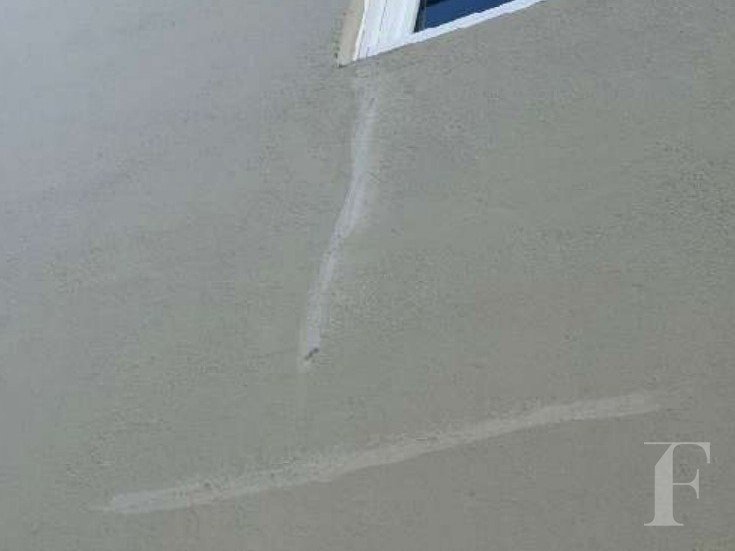
Earlier stucco crack repairs on the rear of the building. Cracks that had been repaired before the visit. The report does not treat them as active repairs; it sets a clear rule for what to do if they reopen.
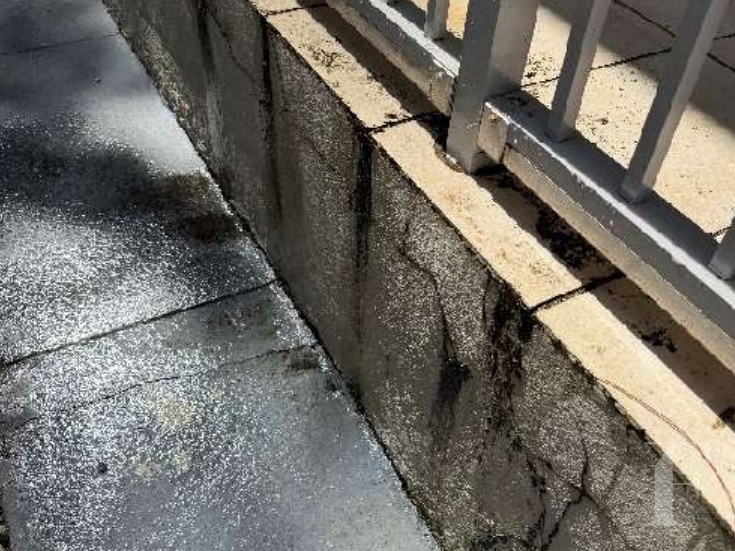
- A leaking gutter at two locations. Water from the gutter line was reaching the wall and the stairs.
How Fortis sorted it.
Every finding went into one of three categories drawn from Miami-Dade County's building recertification guidelines and the Florida Building Code – Existing Building. The result is a clear line between what must be repaired and what can be planned for or handled in routine maintenance.
| Finding | Category | Recommendation |
|---|---|---|
| Spalled concrete | Structural repairs required | Open each area until sound concrete and reinforcement are reached, then repair to a protocol prepared by a Florida-licensed engineer. Minor spalls can be grouted and sealed. |
| Hollow and cracked stucco | Structural repairs required | Check the wall behind the hollow areas; if it is sound, a standard stucco repair follows. Replace to Florida Building Code and ASTM standards and repaint to match. |
| Earlier crack repairs | Preventative repairs suggested | Monitor. If they reopen and spread, a Florida-licensed engineer sets the repair; small cracks can be patched to keep water out. |
| Leaking gutter | Maintenance repairs suggested | Repair the gutter line so water stops reaching the wall and stairs. |
Categories per §8-11(f) of the Code of Miami-Dade County. Report photographs are a representative sample of each deficiency type; exact repair quantities are measured when the repair scope is prepared. Findings are signed by a licensed Florida PE.
From findings to repairs.
When owners move to repairs, Fortis carries the work through its Building Restoration Oversight service.
- Mark and measure. Each deficiency is marked and quantified; bid documents are prepared.
- Bid and permit. Fortis runs the bidding, compares bids line by line and prepares permit documents.
- Oversee the work. Fortis reviews submittals and pay requests and inspects repair areas.
- Close out. Certification letter, record documents and, where it applies, recertification.
KEEP THE FACTS CURRENT.
Florida's building-safety requirements change by county and by year. The Fortis Brief is a short note from Fortis BuildSafe Solutions, a few times a quarter, on what the rules say now and what a board should do about them.
The Board President's Guide to Florida's Building Safety Laws
A plain-language walkthrough of milestone inspections, SIRS, county recertification, and your board's personal exposure — what triggers each requirement and what your board must do next.
Record Appendix
Related record
Continue Reading

Why does Florida inspect older condominiums at all? A short history of the rules your board lives under
October 17, 2026
How much does a milestone inspection cost in Florida, and what drives the price?
October 16, 2026
Broward or Miami-Dade: which recertification clock is your building on?
October 10, 2026
Related Services
Reader questions
Have a question about this?
Every inquiry is reviewed by a Fortis engineer.